Building a Pond Food Chain with Fatheads, Bluegill and Bass
A pond works when every fish has something to eat, so the order you stock in matters as much as the species.
October 27, 2026 · 3 min read
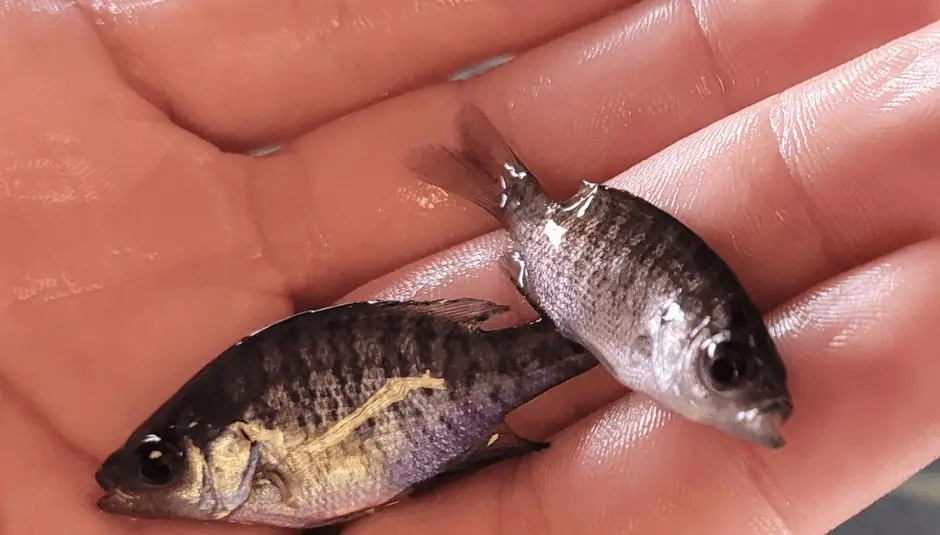
A pond is a food chain with a fence around it. Everything that eats has to be fed by something lower down, and if the bottom of the chain is missing, the top starves or goes hunting for the wrong things. Anderson Minnow Farm in Lonoke, Arkansas, raises fish for each step, from minnows to bluegill to largemouth bass, and the order you stock them in matters as much as which ones you choose.
Start with forage
Forage means fish that exist to be eaten. The farm's species guide is blunt about its favorite: as forage species go, "there is no substitute for the Fathead Minnow." Fatheads are small, they breed readily in a pond, and they give young predators something the right size to catch. The farm's smallest fatheads are feeders, about 1,500 to the pound at ¾ to 1 inch, and its regular grades run from 1½ to 2½ inches.
Golden shiners fill a similar role. The farm calls them its benchmark species, and they run from 1½ inches up to 4 inches in its grade table, so you can choose a size that suits the predators you plan to feed. Either way, the principle is the same. Get a forage base established first, and you give everything that arrives later a place to eat.
Add bluegill next
Bluegill are the middle of the chain. They're panfish, they eat insects and small prey, and in turn they feed larger fish. They also take a hook readily, so they're often the fish that makes a new pond worth visiting while the bass are still growing. The farm sells Northern Bluegill as a forage and pond-stocking fish, and it lists them under its forage fish. Because they sit in the middle, a bluegill population that's too thin leaves the bass short of food, and one that's allowed to run unchecked can crowd the pond with small fish.
One note before you order. The farm's store says permits are required for bluegill in AZ, CT, FL, ID, NV, NM, SD and WY, and it gives 501-676-2716 for questions. Rules differ by state and they can change, so check with your state wildlife agency before you order any fish, wherever you live. A phone call beforehand is a lot cheaper than a problem afterward.
Bass come last
Largemouth bass sit at the top. The farm sells two kinds, F1 hybrid and Northern. An F1 hybrid is a first-generation cross between two largemouth strains, commonly Northern and Florida. Which one suits your pond and climate is a good question to put to the farm or to your state fisheries biologist, because the answer depends on where you live.
Why last? Bass are efficient predators, and they'll eat the forage faster than it can establish if they arrive too early. Put them in before the fatheads and bluegill have had time to reproduce, and you've built a restaurant with no kitchen. Give the lower levels a head start and the bass have a pantry waiting when they show up.
Weeds, grass carp and timing
Some ponds have a vegetation problem, and the farm lists triploid grass carp, 9 to 11 inches, for that. Grass carp eat aquatic plants, and triploid fish are sterile. The store lists them as shipping Mondays only, while other live fish ship Mondays and Thursdays. Whether grass carp are allowed or sensible in your state is another call for your wildlife agency to answer before you order.
Give each step time. A common pattern is to let each group settle, grow and spawn before you add the next. Watch the pond between additions: are small fish showing along the edges, are bluegill taking bait, is the water clear or green? Keep a notebook of what you stocked, when and how many. That record is worth far more than memory when you're trying to work out why something changed two seasons later.
Handle each delivery the way you'd handle any live shipment. Float the sealed bags so the temperature matches, release the fish slowly, and avoid dumping them into a sudden change. The farm's care guidelines for fish held in a tank apply on arrival too: aeration, freshwater and shade.
Sketch your pond's chain on paper before you order. Write down what's in it now, what's missing and the order you'll add fish. Then call the farm in Lonoke at 1-800-20-MINNO (1-800-206-4666) to talk it through. Orders ship on Mondays and Thursdays and need to be in by 10:00 a.m. Central that day.
Anderson Minnow Farm, 1-800-206-4666
Call 1-800-206-4666